.png "logo")

|
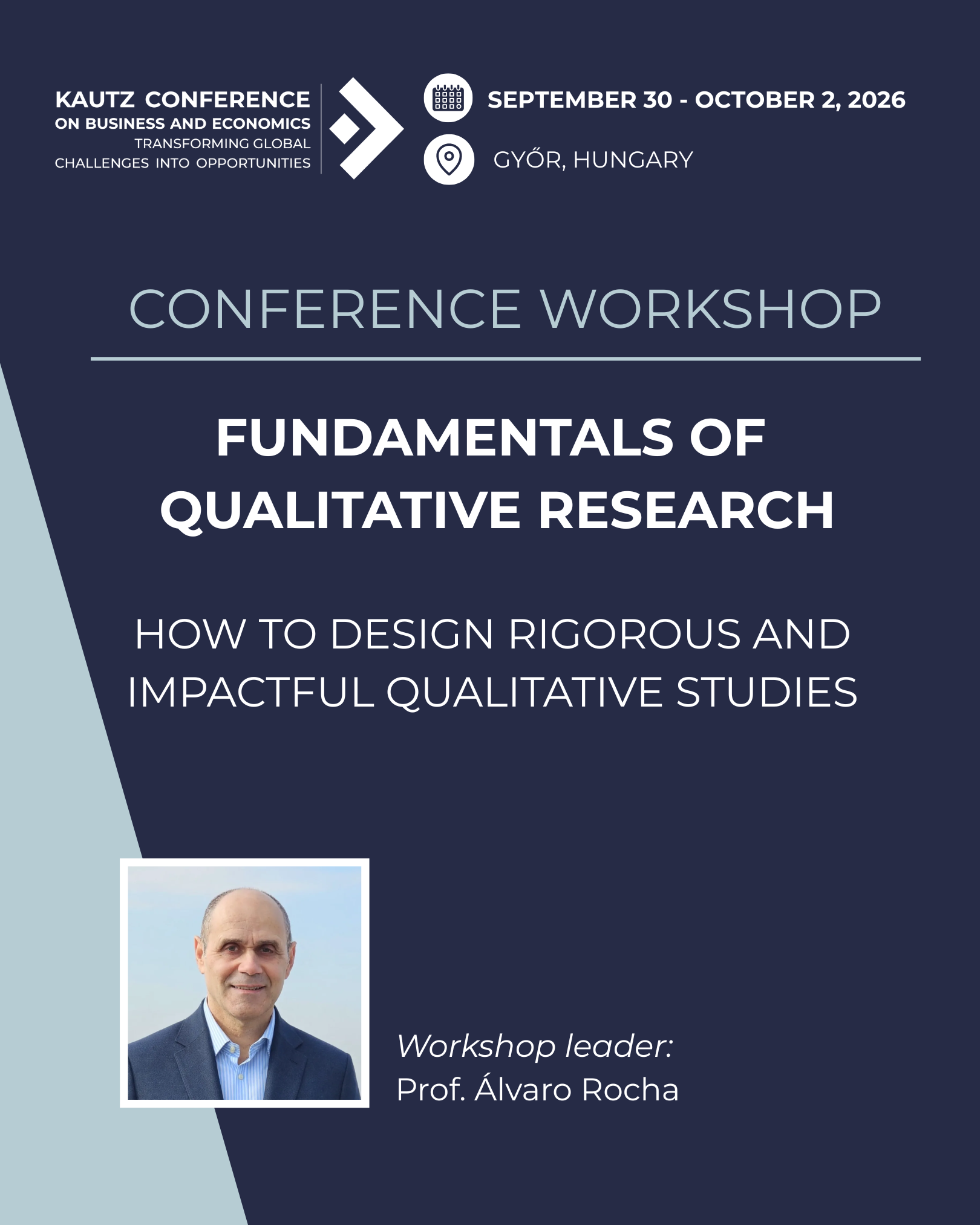
Fundamentals of Qualitative Research |
|
|
|
Workshop leader: Prof. Álvaro ROCHA BioÁlvaro Rocha is an Honorary Professor with Habilitation in Information Science, holding a Ph.D. in Information Systems and Technologies, an M.Sc. in Information Management, and a B.Sc. in Computer Science. He is a Core Researcher at ISEG, University of Lisbon, and a Collaborating Researcher at RISE-Health. His research focuses on maturity models, management information systems, information systems quality, intelligent information systems, cybersecurity, e-government, e-health, and information technology in education. He also serves as Honorary Professor at Amity University (India) and Visiting Professor at several international institutions, including the Harbin Institute of Technology and Brawijaya University. He is Chairman of AMARITS Consulting, Chair of the Information and Technology Management Association (ITMA), and Vice-Chair of the IEEE Portugal Section Systems, Man, and Cybernetics Society Chapter. He is Founder and Editor-in-Chief of two journals and Scientific Manager of a Springer Nature book series. Recognized among the world’s top 1% scientists, he has published extensively in leading indexed journals. Overview: This short workshop, lasting approximately 1 to 1.5 hours, introduces young researchers to the main foundations of qualitative research, based on the book Fundamentals of Qualitative Research. It is designed as a concise and practical session for participants who wish to better understand how qualitative research can be used to explore human experiences, meanings, behaviors, perceptions, and social contexts. The workshop will provide an overview of key characteristics of qualitative research, including naturalistic inquiry, the role of the researcher, participant perspectives, reflexivity, ethical considerations, and the importance of rich, contextualized descriptions. It will also briefly address how to formulate qualitative research questions, select appropriate research designs, define sampling strategies, and choose suitable data collection methods, such as interviews, focus groups, observation, and document analysis. Given the limited duration, the session will focus on the most essential concepts and practical decisions involved in planning a qualitative study. Particular attention will be given to methodological rigor, including credibility, transferability, dependability, and confirmability, as well as to common challenges faced by students when applying qualitative methods in master’s dissertations and doctoral theses. By the end of the workshop, participants should have a clear introductory understanding of qualitative research and be better prepared to make informed methodological choices in their own research projects. The workshop is especially relevant for students in social sciences, education, health, management, information systems, and related interdisciplinary areas. |
|
Introduction to Using Visual Data in Research |
|
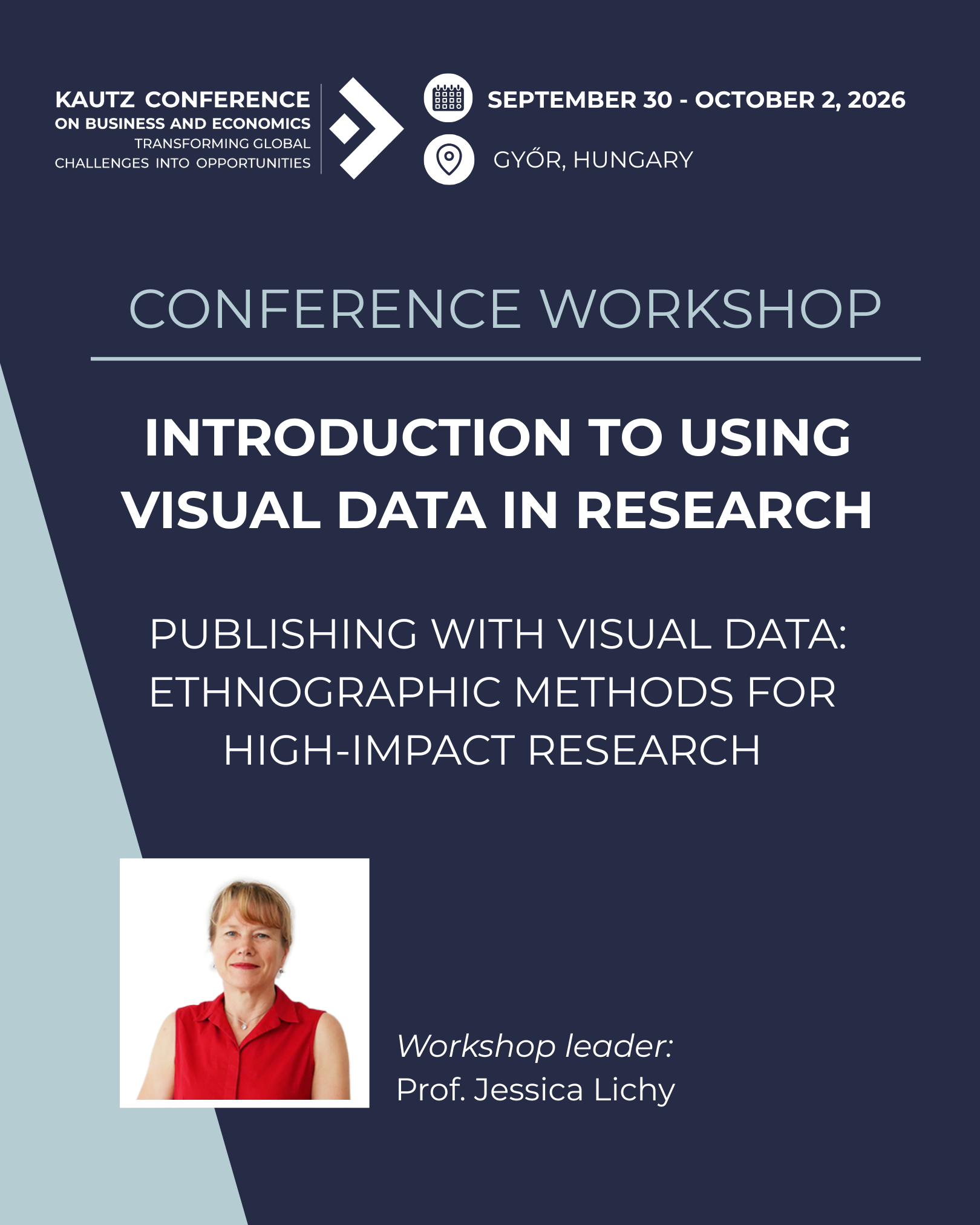 |
Workshop leader: Prof Jessica LICHY BioJessica Lichy, PhD, HDR, is a Full Professor at IDRAC Business School (France) and Visiting Professor at the University of Sunderland Faculty of Business & Technology (UK). She is also a research fellow at Kautz Gyula Faculty of Business & Economics, Széchenyi István University (Hungary). Her research focuses on sustainable digital transformation, business modelling, intergenerational/intercultural digital usage, socio-materiality, and sociotechnical disparity. Her current work examines emerging trends in technology-enhanced living from a user-centric perspective. Jessica serves on the editorial boards of several leading academic journals and actively contributes to international research conferences, teaching exchanges, and collaborative academic initiatives. She is committed to fostering innovation in digital and business research. Jessica is currently serving as Strand Lead for Scholarship & Research for Impact, within the Academy of Marketing (UK), and will facilitate a collaborative workshop on 'Engaged Scholarship and Impactful Research' during the conference. Overview: This short workshop, lasting approximately 1 to 1.5 hours, introduces young researchers to the main foundations of qualitative research, based on the book Fundamentals of Qualitative Research. It is designed as a concise and practical session for participants who wish to better understand how qualitative research can be used to explore human experiences, meanings, behaviors, perceptions, and social contexts. The workshop will provide an overview of key characteristics of qualitative research, including naturalistic inquiry, the role of the researcher, participant perspectives, reflexivity, ethical considerations, and the importance of rich, contextualized descriptions. It will also briefly address how to formulate qualitative research questions, select appropriate research designs, define sampling strategies, and choose suitable data collection methods, such as interviews, focus groups, observation, and document analysis. Given the limited duration, the session will focus on the most essential concepts and practical decisions involved in planning a qualitative study. Particular attention will be given to methodological rigor, including credibility, transferability, dependability, and confirmability, as well as to common challenges faced by students when applying qualitative methods in master’s dissertations and doctoral theses. By the end of the workshop, participants should have a clear introductory understanding of qualitative research and be better prepared to make informed methodological choices in their own research projects. The workshop is especially relevant for students in social sciences, education, health, management, information systems, and related interdisciplinary areas. This event focuses on how researchers can collect and analyze visual data for research papers as an alternative to quantitative methods (surveys) and qualitative approaches (interviews). Visual data help uncover individuals’ conceptualizations of complex situations, revealing hidden contextual influences and previously unarticulated perspectives. When researchers aim to capture complexity, visual methods assist decision-makers in avoiding oversimplifications and fostering deeper engagement in the research process. Two key visual data collection methods will be explored: (i) the Rich Picture (RP) technique, where participants create sketches by hand or digitally, and (ii) auto-driven photo elicitation interviews (PEI), where participants take photographs to discuss their thoughts and experiences. The session will also cover reviewer perceptions of visual data and strategies for ensuring analytical rigour. This event is ideal for researchers interested in new data collection methods, those seeking to complement quantitative approaches with qualitative insights, and reviewers keen on understanding visual data methodologies. Attendees will gain a deeper understanding of available visual methods, develop stronger analyses of non-quantitative data, and learn techniques to enhance analytical rigor. |
|
Empowering Young Scholars to Publish in Top Journals Through Editors' Wisdom and the Reviewers' Lens |
|
|
|
Workshop leader: Professor Ajay Manrai BioDr. Ajay K. Manrai is Professor Emeritus of Marketing at the Alfred Lerner College of Business and Economics, University of Delaware. As Editor-in-Chief of the Journal of Global Marketing (Taylor & Francis), a Scopus Q1, Best Quartile journal with a 2024 Scopus CiteScore of 7.7 and a Clarivate ESCI Indexed journal with a Journal Impact Factor of 4.3 in 2024) and former President of the International Management Development Association (2010-2012), Professor Manrai is a marketing luminary ranked in the top 1% of scholars globally (ScholarGPS 2024). He holds a Ph.D. from the Kellogg School of Management at Northwestern University (ranked 31st in the 2025 World University Rankings), an MBA from the Indian Institute of Management, Ahmedabad, and a B.Tech in Mechanical Engineering from the Indian Institute of Technology, Delhi. With over four decades of academic experience, Dr. Manrai has held faculty appointments at the Kellogg School, the Wharton School of the University of Pennsylvania (ranked 14th in the 2025 World University Rankings), and the University of Delaware’s Alfred Lerner College. He has authored over 150 peer-reviewed publications in high-impact journals, including Marketing Science (ABS 2024, 4*), Journal of Marketing Research (ABS 2024, 4*), Journal of International Marketing (ABS 2024: 3), Journal of Global Marketing, International Business Review (ABS 2024: 3), Journal of Business Research, and Psychometrika (ABS 2024: 3). Dr. Manrai’s accolades reflect his impact, including the University-wide Excellence in Teaching Award (1994) and multiple Alfred Lerner College of Business and Economics MBA and EMBA Teaching Awards. As a global academic leader and mentor, he has traveled to over 150 countries across seven continents. He received a Fulbright-Nehru Senior Research Scholar grant (India, 2011) and continues to support the scholarly community through editorial leadership, mentorship, and international engagement.
Overview: Publishing in high-quality academic journals is a critical milestone in a scholar’s career, yet the path to publication is often complex and competitive. This talk shares key insights and practical strategies drawn from editorial experience to help researchers improve their chances of success in the peer-review process. We will explore essential components of a strong manuscript, including developing original research questions, methodological rigor, coherent theoretical contributions, and clearly articulated managerial and societal relevance, especially within global marketing and international business. The session will also address common reasons for desk rejections and provide actionable tips on positioning a paper, responding effectively to reviewer feedback, and navigating the revise-and-resubmit process. While examples are referenced in the Journal of Global Marketing, the recommendations will be broadly relevant to various marketing and international business journals. |
93.png "Conference workshops (1)93.png")
.png "Résztvevői promo (1).png")
.png "INTERNATIONAL-CONFERENCE-ALERTS (1).png")



.png)